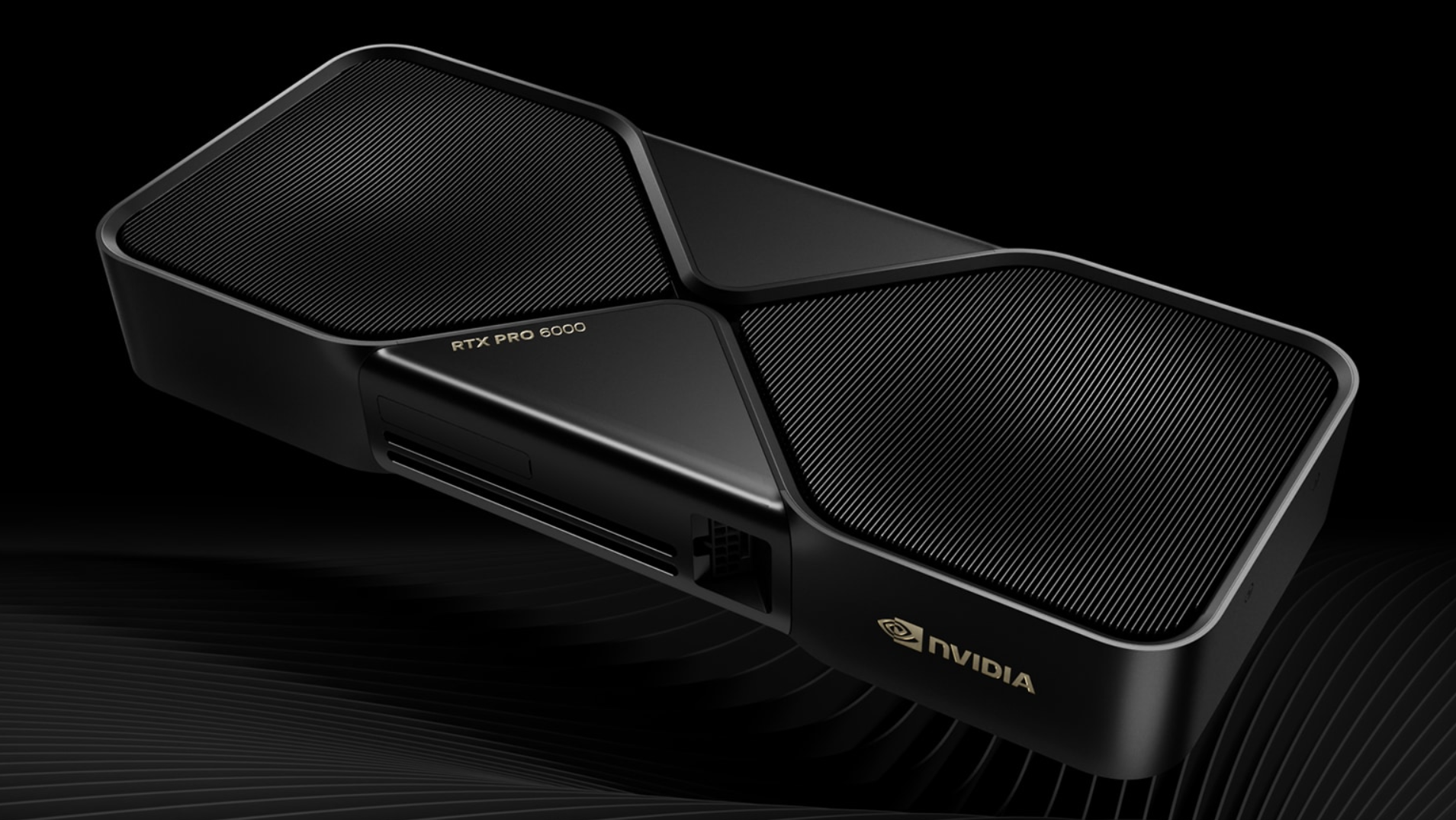
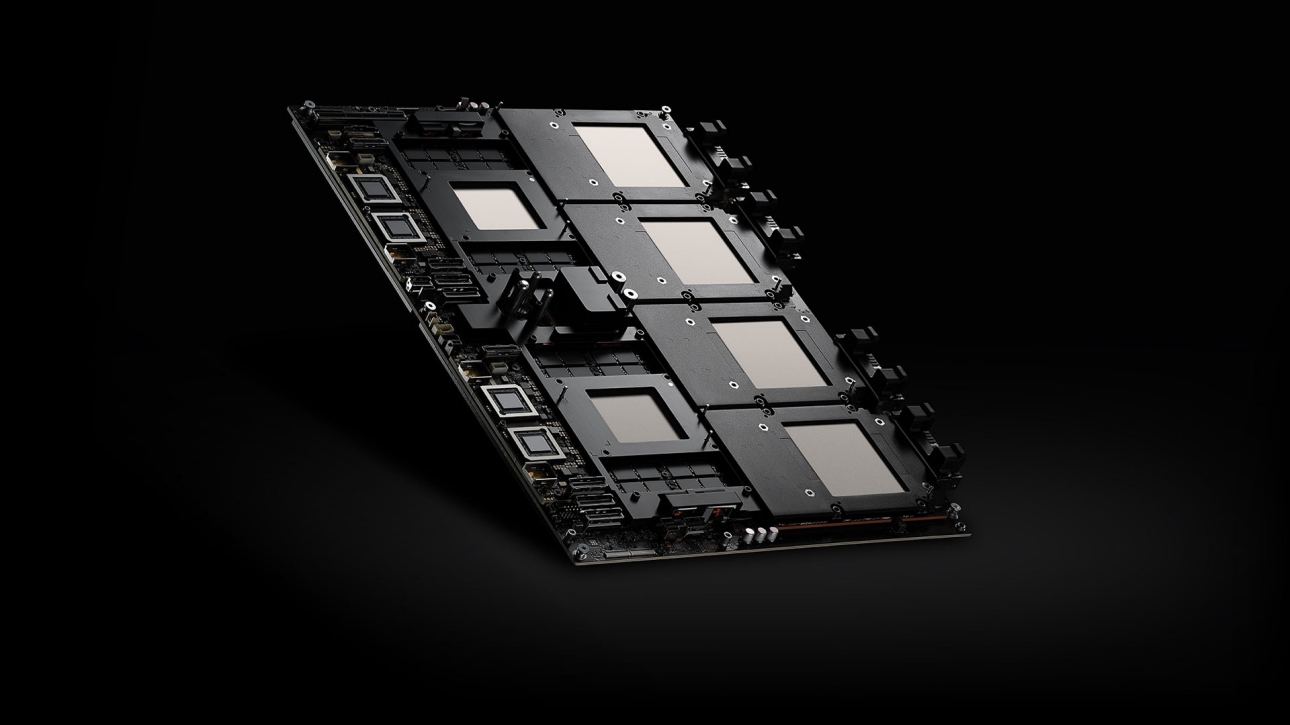
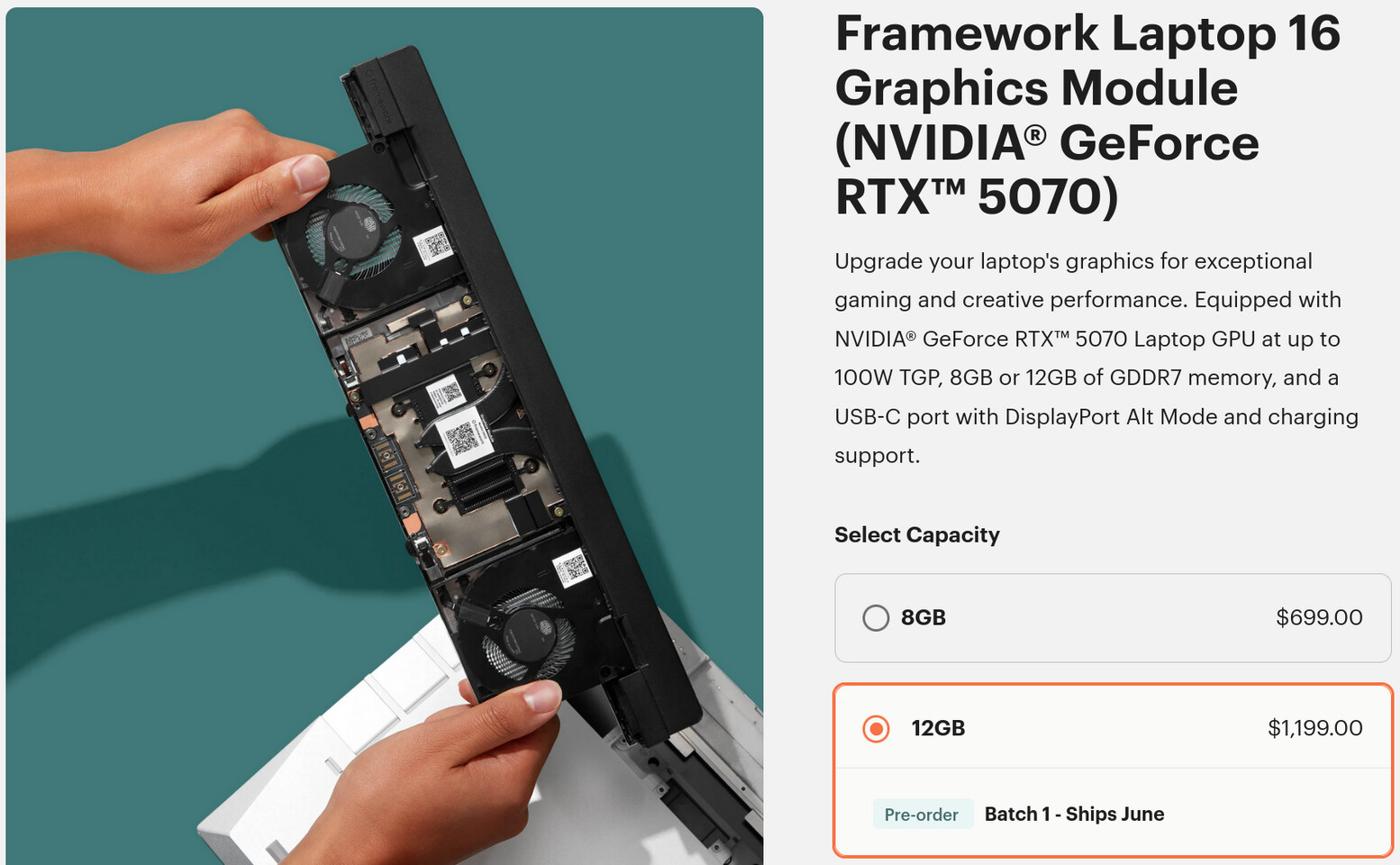
The NVIDIA GeForce RTX 5070 12 GB module represents a significant advancement in mobile GPU technology, particularly for users demanding high memory bandwidth. Designed specifically for the Framework Laptop 16, this upgrade introduces 12 GB of GDDR6 VRAM, addressing the needs of AI workloads and professional graphics applications where memory constraints can hinder performance.
However, the module's $1,199 price tag—72% higher than its 8 GB counterpart—poses a critical question: Is the additional capacity justified by real-world benefits, or does it reflect broader supply chain challenges in the PC hardware market? The decision to upgrade will hinge on how much value professionals derive from the extra VRAM compared to other high-performance options.
At a glance
- Model: NVIDIA GeForce RTX 5070 12 GB (Framework Laptop 16 module)
- VRAM: 12 GB GDDR6
- Previous Variant: RTX 5070 8 GB ($699)
- Price Increase: $499 (72% higher for 50% more VRAM)
- Target Use Cases: AI model training, high-resolution rendering, professional graphics
The RTX 5070 architecture is built to handle modern computational demands, and the 12 GB variant extends these capabilities further. For tasks like large-scale data processing or high-resolution rendering, the additional memory can eliminate bottlenecks, but whether this translates into meaningful productivity gains remains a key consideration for potential buyers.
Performance and real-world impact
The RTX 5070 12 GB module is tailored for users who prioritize performance over portability. Its design emphasizes AI acceleration, ray tracing, and professional-grade graphics, making it a compelling option for enterprise workstations and creative professionals. The increased VRAM allows for smoother workflows in memory-intensive applications, but the price premium must be weighed against the potential for future-proofing.
For example, AI researchers or 3D artists working with large datasets may find the extra capacity essential, while general users or gamers might not see proportional benefits. The module’s performance also needs to be benchmarked against desktop GPUs to determine if its mobile form factor justifies the cost for high-end tasks.
Key considerations
- Price vs. Value: The 72% price increase for 50% more VRAM raises questions about affordability and whether the premium aligns with market expectations.
- Use Case Fit: The additional VRAM is most valuable in AI workloads, high-resolution rendering, or professional graphics, where memory constraints can limit performance.
- Audience: Primarily targeted at professionals in enterprise, AI, and creative fields. Less relevant for general gaming or everyday productivity tasks.
- Long-Term Reliability: The durability and longevity of modular GPU solutions in laptops remain untested over time, which could influence adoption.
The RTX 5070 12 GB module solidifies Framework’s reputation for innovative hardware design, but its high cost may restrict it to a niche audience. For most users, the decision will depend on whether the performance gains justify the premium compared to desktop alternatives or other modular platforms.
Availability is currently limited, with no confirmed timeline beyond the initial launch. The fixed price of $1,199 reflects both NVIDIA’s positioning and Framework’s strategy for upgradeable hardware. As supply constraints ease, the module’s market value may shift, but for now, it remains a high-stakes upgrade for those seeking top-tier mobile performance.