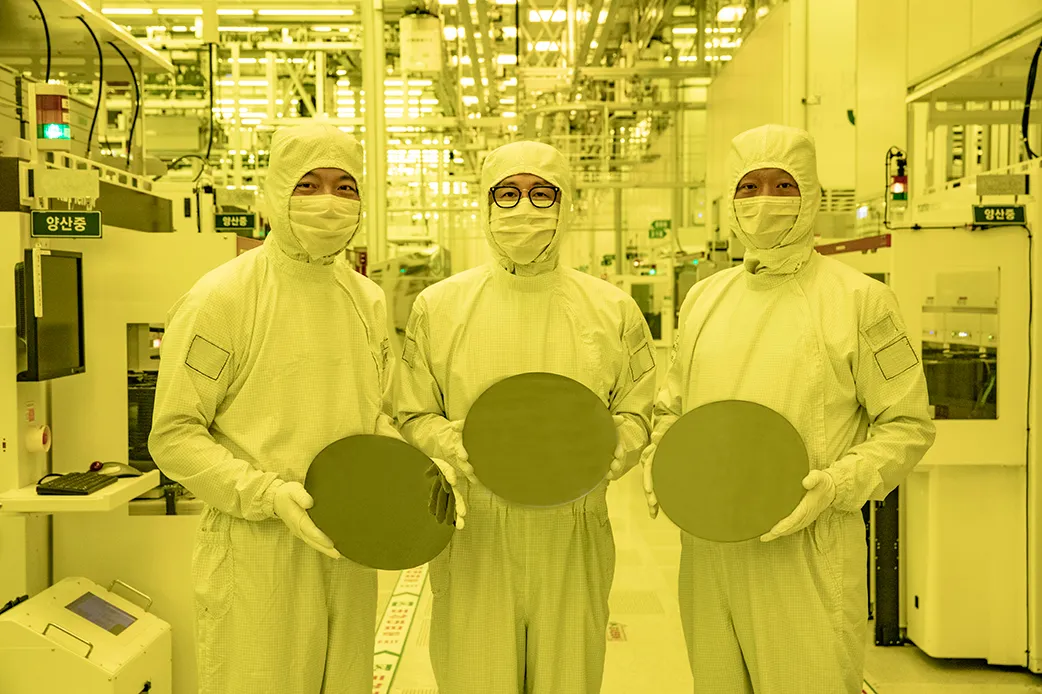
An 80% yield rate in semiconductor manufacturing is a benchmark that separates experimental processes from those ready for widespread adoption. Samsung’s foundry division has reached this critical threshold with its 4nm technology, drawing significant attention from major tech players like Groq, IBM, and Baidu. This achievement goes beyond mere fabrication—it suggests a fundamental shift in how foundries interact with the AI hardware ecosystem, potentially accelerating vertical integration in the industry.
For years, TSMC has maintained an unchallenged lead in advanced process nodes, but Samsung’s push into 4nm signals a deliberate effort to disrupt that dominance. The focus isn’t just on performance or cost—it’s about control and collaboration. Groq, for example, is backed by NVIDIA yet appears to be crafting its own path, possibly leveraging Samsung’s foundry capabilities to optimize AI accelerators in ways that reduce dependency on traditional GPU architectures.
Decoding the 80% Yield
- Samsung’s 4nm process is now stable enough for large-scale production, with yields meeting industry standards for high-end nodes.
- The technology offers significant improvements in power efficiency and transistor density, crucial for next-generation AI chips.
- Clients like IBM and Baidu are likely evaluating Samsung as a way to diversify supply chains while gaining access to cutting-edge process nodes without full vertical integration.
The 4nm node isn’t just about raw speed—it’s about how those transistors perform in real-world AI workloads. Samsung’s foundry is positioning itself not only as a fabrication partner but also as a collaborator, providing insights into how software stacks can be optimized for hardware efficiency. This could lead to tighter coupling between foundries and chipmakers, making it more challenging for competitors to enter the ecosystem.

Broader Industry Implications
- If Samsung maintains or improves its yield rates, it could erode TSMC’s market share in high-end foundry services, leading to a competitive two-horse race in advanced process nodes.
- The trend toward vertical integration in AI hardware could accelerate, with foundries playing a more strategic role than ever before.
- Clients may find themselves locked into ecosystems where both software and hardware are co-developed, potentially making it harder for startups or smaller players to compete without deep partnerships.
The semiconductor industry is at a pivotal moment. Foundries like Samsung aren’t just fabricating chips anymore—they’re shaping the future of AI workloads. If this momentum persists, the next few years could see a fundamental shift in how companies approach hardware design, with foundry partnerships becoming as critical as any technological innovation.