Imagine typing on a keyboard where every keypress feels like sinking into butter, smooth yet responsive, with a tactile bump that signals the transition between states. That’s the experience many users chase, but the term used to describe it—'creamy'—is increasingly drawing criticism for being vague and subjective.
Mechanical keyboards have evolved significantly over the past decade, moving beyond the clatter of cherries and clicky switches to offer a spectrum of sensations. Yet the industry’s reliance on 'creamy' as shorthand for a desirable typing feel is causing friction among enthusiasts who argue it oversimplifies what makes a keyboard enjoyable or functional.
What Does 'Creamy' Actually Mean?
The term 'creamy' has become synonymous with smooth, linear switches that lack the pronounced tactile bump of traditional mechanical switches. These switches, often found in low-profile or high-speed designs, prioritize speed and quiet operation over feedback. However, the word itself carries culinary connotations—rich, indulgent—that don’t necessarily align with the technical or ergonomic qualities users care about.
- Smoothness: A lack of noticeable resistance or bump during keypress.
- Speed: Faster actuation times, ideal for gaming or fast typing.
- Quietness: Reduced noise output compared to clicky switches.
But is 'creamy' the best way to describe these traits? Critics argue that it’s a marketing buzzword that obscures more nuanced differences between switches. For example, a switch labeled 'creamy' might feel buttery smooth to one user and rubbery to another, depending on factors like keycap material or typing style.
The Problem with Subjective Descriptors
Manufacturers often use 'creamy' to evoke a sense of luxury or premium quality, but the term lacks precision. Unlike technical specifications—such as actuation force (measured in grams) or travel distance (measured in millimeters)—'creamy' is entirely subjective. Two keyboards labeled as such could feel radically different based on their switch mechanics, lubrication, or stabilizer design.
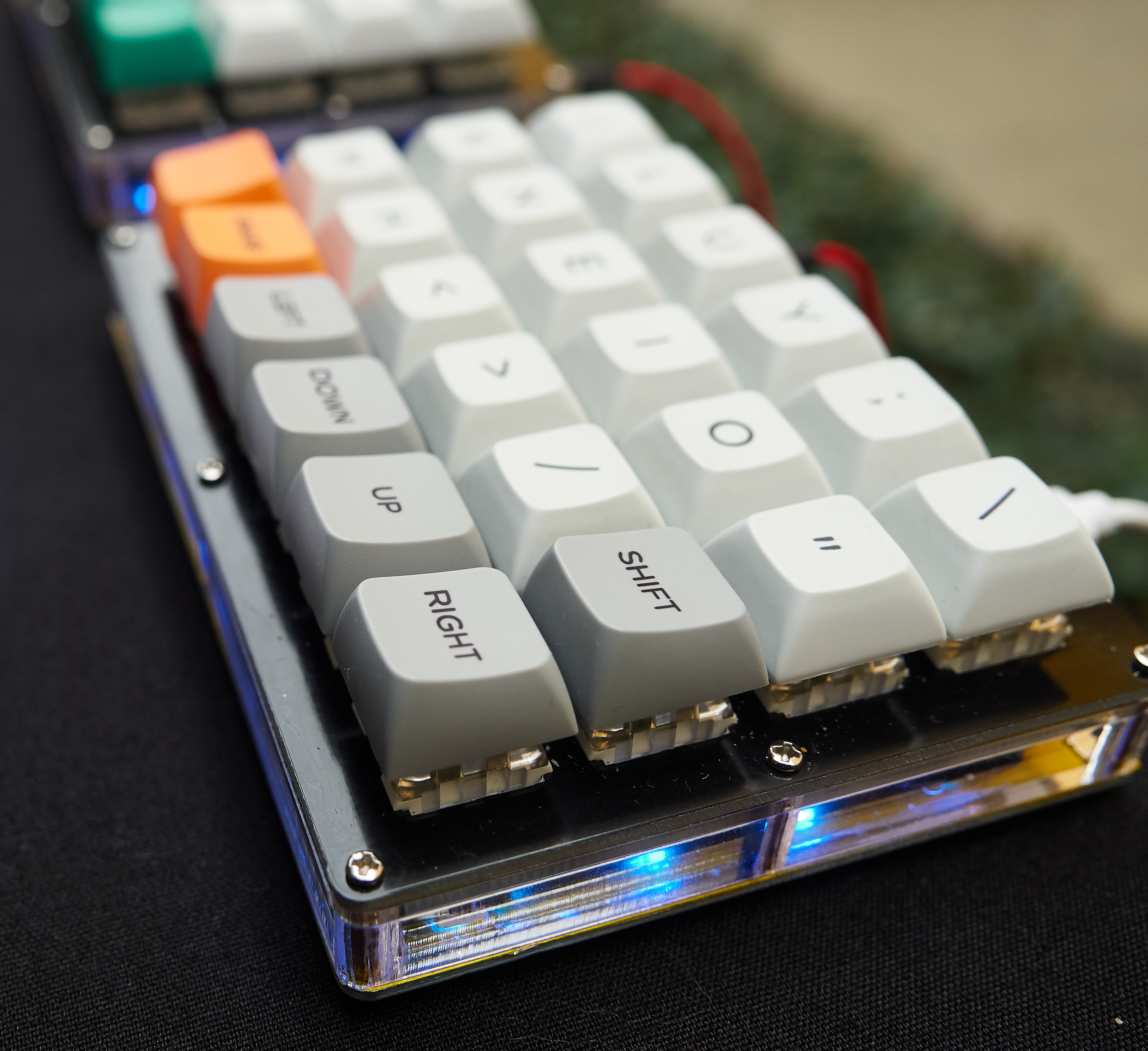
This subjectivity can lead to disappointment for users who expect a uniform experience. A keyboard marketed as 'creamy' might deliver the desired smoothness but fall short in other areas, like durability or key rollover (the ability to register multiple keys pressed simultaneously). For competitive gamers or professionals relying on long typing sessions, these overlooked details can outweigh the appeal of a smooth switch.
Alternatives and Industry Shifts
The industry is gradually moving away from vague descriptors toward more technical language. Terms like 'linear,' 'tactile,' or 'clicky' are gaining traction because they describe specific mechanical behaviors. Linear switches, for instance, offer no tactile bump but can still vary in smoothness and noise level.
Some manufacturers are also adopting standardized terminology to better communicate switch characteristics. For example, specifying the type of switch (e.g., Cherry MX Red vs. Gateron Yellow) or including measurable metrics—such as actuation force (45g) or travel distance (3.8mm)—helps users make informed choices without relying on subjective labels.
A Call for Clarity
The pushback against 'creamy' isn’t about dismissing the appeal of smooth switches; it’s about demanding transparency in a market that thrives on hype. Users want to know exactly what they’re getting, whether it’s the whisper-quiet operation of a linear switch or the satisfying clack of a tactile design. As mechanical keyboards continue to diversify—with options for gaming, office work, and everything in between—the language used to describe them should reflect that diversity.
Moving forward, the industry has an opportunity to replace vague terms with clear, actionable descriptions. Whether through technical specs, user reviews, or manufacturer transparency, the goal should be to help users choose keyboards based on what truly matters: performance, comfort, and durability—not just how they feel in the moment.