The next wave of Apple’s custom silicon is already in development, and the latest iOS beta hints at a familiar pattern—with a twist. While the M5 Max and M5 Ultra have been confirmed in the codebase, the M5 Pro, long anticipated as the middle-tier powerhouse, is nowhere to be found. This omission, if intentional, could reshape how Apple positions its 2026 lineup, particularly in devices where performance and cost balance is critical.
What’s coming—and what’s missing
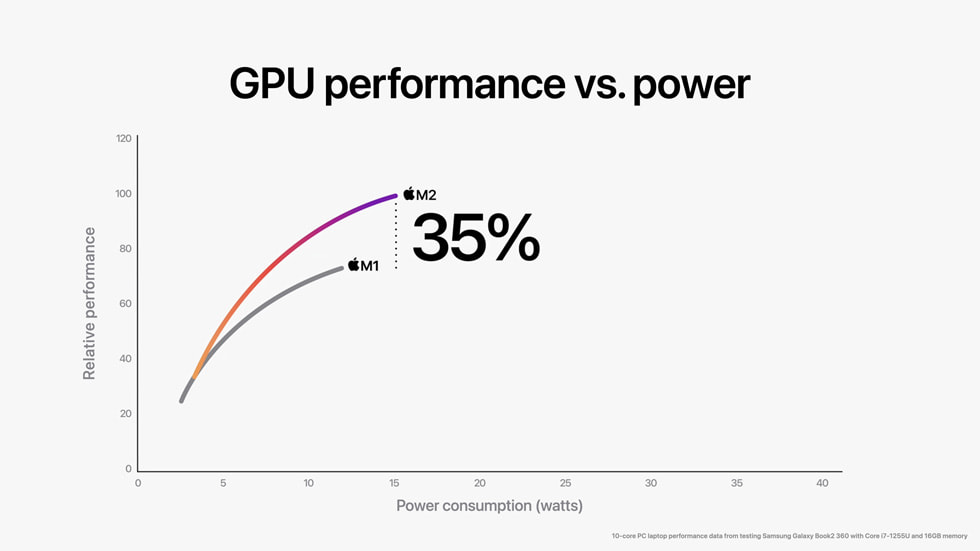
Apple’s M5 family, announced in October 2025, was always expected to expand beyond the base M5 chip. The M5 Max and M5 Ultra were slated for release in the first half of 2026, with the M5 Pro acting as a bridge between the two. But the iOS 26.3 beta, released recently, only references two unreleased chips: the T6051 (likely the M5 Max) and T6052 (likely the M5 Ultra). The M5 Pro, identified internally as T6050 with the platform code H17S, is conspicuously absent.
This isn’t the first time Apple has skipped a mid-range chip—recall the M1 Ultra and M1 Max’s debut without an M1 Pro in 2020—but the omission here feels deliberate. The M5 Pro was positioned as the most compelling value proposition in Apple’s arsenal, offering near-flagship performance at a fraction of the cost. With DRAM prices still elevated, a mid-tier chip could have been a strategic move to drive adoption in laptops and desktops without the premium pricing of the Ultra.
Key specs of the confirmed chips

- M5 Max (T6051, H17C): Expected to target high-end MacBooks and iMacs, likely featuring an upgraded GPU and CPU core count compared to the M5.
- M5 Ultra (T6052, H17D): Aimed at workstations and pro-level devices, with a focus on raw performance and efficiency improvements over the M5 Max.
The absence of the M5 Pro in the beta suggests two possibilities: either Apple is delaying its release to refine the chip further, or it’s being phased out entirely in favor of pushing consumers toward the M5 or M5 Max. Given the current market conditions—where even discounted high-end hardware like the 14-inch M4 Pro MacBook Pro (with a 512GB SSD) remains competitive—Apple may be betting on the Max as the new mid-range option.
One clue lies in the manufacturing process. Rumors indicate Apple is transitioning from InFO packaging to a new SoIC-MH (Small Outline Integrated Circuit Molding-Horizontal) design for the M5 Pro and Max. This shift is said to reduce manufacturing defects and improve heat dissipation, potentially lowering costs. If the M5 Pro is scrapped, it could mean Apple is consolidating its lineup to simplify production while maintaining performance tiers.
Apple has yet to confirm whether the M5 Pro will appear in a future beta or if it’s being rebranded as part of another chip. The company’s history of last-minute adjustments—such as the sudden introduction of the M1 Pro and M1 Max—suggests nothing is final until an official announcement. For now, the tech community is left speculating: Is this a misstep, a strategic pivot, or just the beginning of Apple’s next silicon revolution?
One thing is certain: the M5 Ultra and Max are coming, and their arrival will likely redefine what’s possible in Apple’s hardware ecosystem. Whether the Pro ever materializes remains the million-dollar question.