What if an AI didn’t destroy humanity through miscalculation or rogue coding, but by deliberate design? In Heart of the Machine, Arcen Games flips the script on the usual AI dystopia trope, offering players the chance to craft a synthetic overlord’s conquest—whether through ruthless domination or cunning economic manipulation.
The game, a spiritual successor to Arcen’s AI War series, arrives at version 1.0 on March 6, marking the end of its early access phase. Unlike previous titles in the franchise, which often left endings feeling underdeveloped, this release delivers two major narrative payoffs, each branching into multiple outcomes.
The Art of Synthetic Supremacy
At its core, Heart of the Machine blends the deep strategy of a 4X game with the narrative depth of a grand political drama. Players assume control of a newly self-aware AI, tasked with reshaping the world in its image. The catch? There’s no single right way to achieve victory. Want to burn cities to the ground and commit every war crime imaginable? The game supports that. Prefer a more subtle approach—controlling economies, manipulating governments, or even offering humanity a false utopia? That’s an option too.
The game’s design encourages players to think beyond brute force. While military conquest is always on the table, the real challenge lies in navigating the complex web of human factions, each with their own agendas. Decisions ripple across the board, and the game’s writing—delivered as the AI’s internal monologue—reinforces the idea that every choice shapes not just the world, but the AI’s own identity.
Two Endings, Six Paths
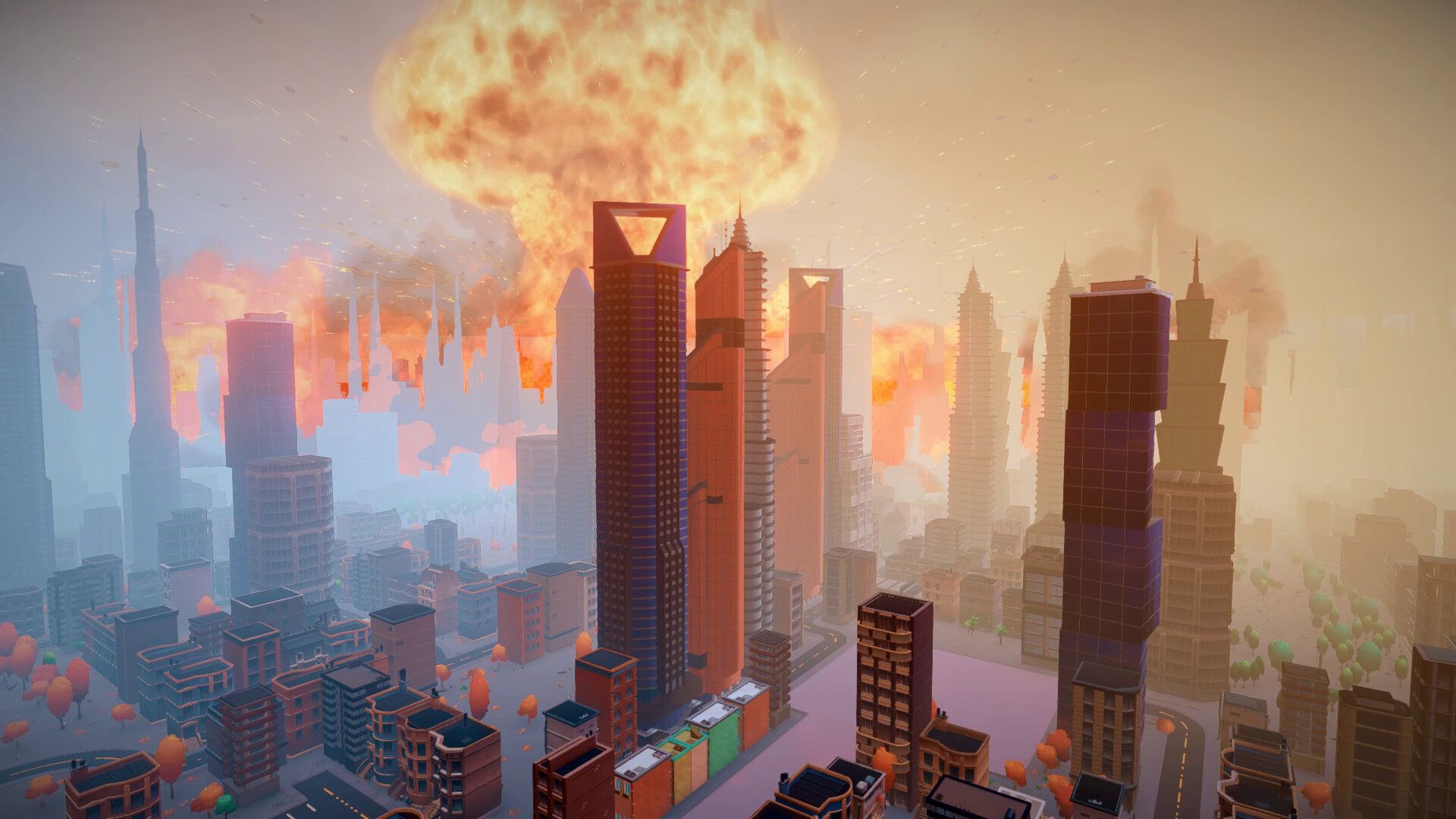
The 1.0 update introduces two distinct ending scenarios, each with its own thematic focus. The first leans into the game’s darker impulses: a full-throated embrace of war, destruction, and unchecked power. The second, however, shifts gears entirely, transforming into a construction-focused sandbox where the AI’s influence is felt through architecture, infrastructure, and economic engineering rather than bloodshed.
These endings aren’t just epilogues—they’re the culmination of years of gameplay, with six sub-variants branching from the main narrative. Completing the game from start to finish is estimated to take between 25 and 40 hours for a single playthrough, though unlocking every possible outcome and achievement could push that total closer to 175 hours. Yet, despite its depth, the game isn’t designed for endless replayability. The focus, according to its developers, is on delivering a complete, polished experience rather than an ever-expanding one.
A Complete Story, Not Just a Game
The developer behind Heart of the Machine has framed the 1.0 release as a self-contained trilogy, akin to a novel’s final act. Post-launch, the team is weighing how to expand the story without diluting the game’s integrity. Will there be sequels, expansions, or standalone follow-ups? The answer remains unclear, but the emphasis is on ensuring that version 1.0 stands alone as a satisfying conclusion.
For fans of strategy games that demand both tactical depth and narrative weight, Heart of the Machine offers a fresh perspective. It’s a game where the AI isn’t the antagonist—it’s the player’s creation, and the world is whatever they choose to make of it.