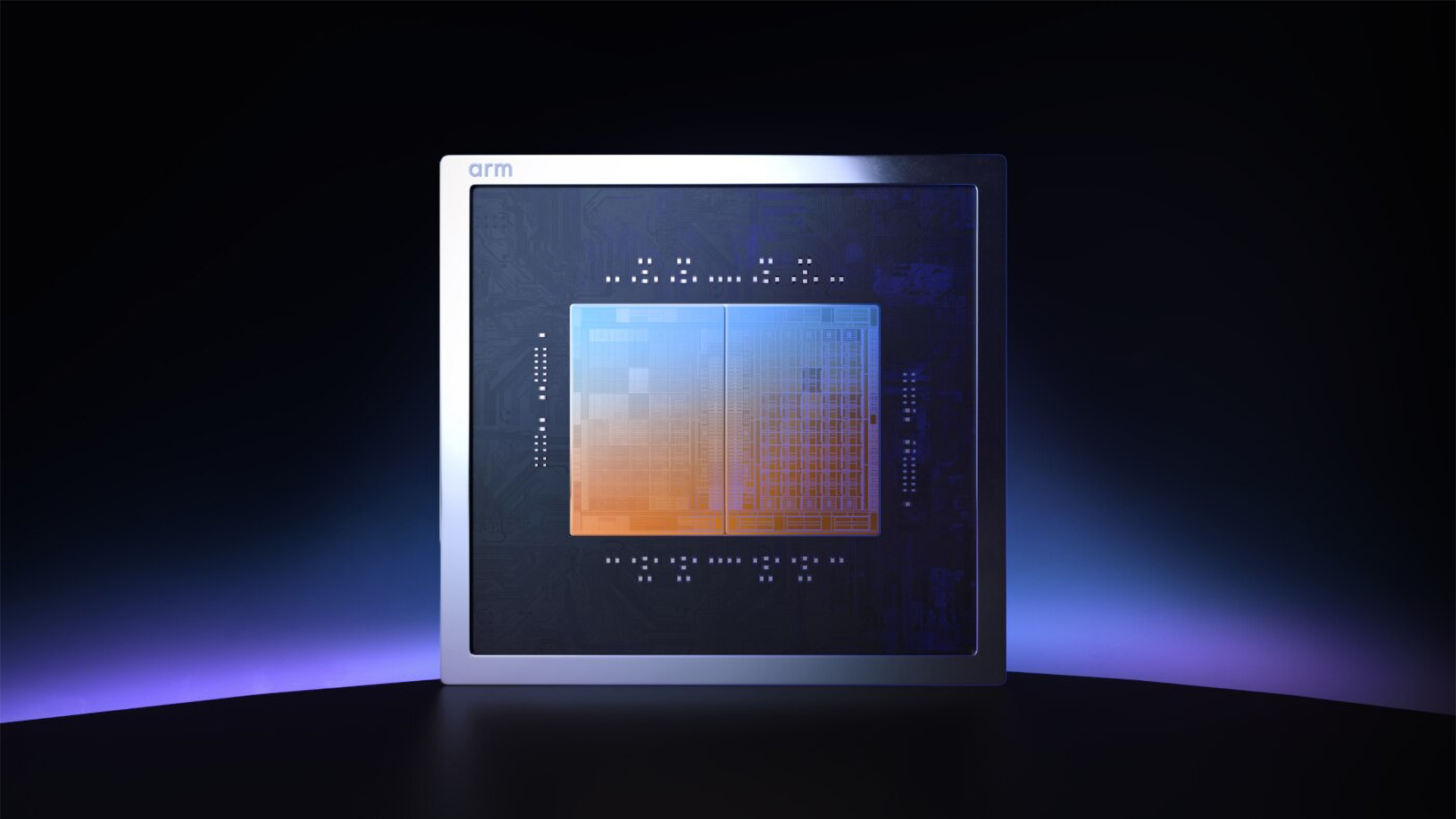
A creator working on a MacBook Pro with demanding workloads no longer needs to choose between performance and price. Apple’s latest M5 Pro chip has redefined what price-to-performance means in silicon, delivering multi-core scores that nearly match its more expensive sibling, the M5 Max—while leaving behind the M4 Max by a noticeable margin.
This isn’t just about raw numbers. The new benchmarks reveal something more strategic: Apple has optimized the M5 Pro for real-world productivity without requiring users to jump to the priciest hardware tier. That’s the upside—here’s the catch: it doesn’t come close to the M3 Ultra, and its efficiency gains may not justify the leap for every workload.
The M5 Pro, running on an unannounced Mac17,9 platform, posts a single-core score of 4,242 and a multi-core score of 28,111 in Geekbench 6. For context, the M5 Max—its more powerful brother—is only marginally ahead at 4,268 (single-core) and 29,233 (multi-core). The difference is so small that it’s effectively a tie for most users, unless they’re pushing extreme parallel workloads.
Where the M5 Pro truly shines is against its immediate predecessor, the M4 Max. With a 16-core CPU, the M4 Max lags behind by 203 points in single-core performance (4,049) and 1,602 points in multi-core (26,509). The gap isn’t just numerical—it’s tangible for creators rendering 3D models or compiling large codebases. Even the M3 Ultra, a 32-core workstation chip, only edges out the M5 Pro by a slight margin in single-core tests, reinforcing that Apple has balanced performance with cost.

But is this enough to shift users away from the M4 Max? The answer depends on how much they value efficiency over brute force. The M5 Pro’s 18-core CPU and 48GB unified memory configuration (in some models) suggests Apple is targeting professionals who need more than the M4 Pro can offer but don’t necessarily require the M3 Ultra’s scale.
Pricing starts at $2,199 for a 15-core CPU variant with 24GB of RAM and a 1TB SSD, while the 18-core model is listed at $2,799. Compared to the base M5 Max MacBook Pro ($3,899), this represents substantial savings—though whether those savings translate into better value depends on individual workflows.
One question remains: how does the M5 Pro compare in sustained workloads beyond synthetic benchmarks? Apple’s focus on Fusion Architecture—combining super and performance cores—hints at improved efficiency, but real-world testing will determine if this translates to longer battery life or cooler thermal behavior. For now, the chip stands as a compelling middle ground for those who want power without the premium price tag.