Valve’s long-awaited Steam Machine is shaping up to be a living room gaming hub capable of pushing most Steam titles to 4K 60 fps—though not without compromise. The company has outlined its performance approach, emphasizing FSR-based upscaling as the default solution, while acknowledging that some games may require lower resolutions or variable refresh rates to avoid excessive scaling artifacts.
According to internal testing, the majority of Steam’s library can achieve 4K 60 fps when paired with FSR, a technology designed to enhance lower-resolution outputs into high-end displays. However, a subset of titles—particularly those with high internal rendering demands—will need adjustments. Valve suggests playing these at lower framerates while maintaining a 1080p internal resolution to preserve visual quality.
The 4K Ambition
This isn’t a new goal for Valve. Engineers have consistently framed the Steam Machine’s performance benchmark as 4K60 for every game, provided upscaling is applied. The challenge lies in balancing real-time rendering with upscaling fidelity, especially as ray tracing and advanced effects become more common. To address this, Valve is exploring multiple solutions: HDMI VRR support, refined upscaling algorithms, and driver-level optimizations to improve ray tracing efficiency.
The push for 4K aligns with the living room PC’s primary use case—most households now own 4K TVs, and Valve is betting on a seamless transition from desktop to big-screen gaming. But the tradeoffs highlight a broader industry tension: whether to prioritize raw resolution or smoother gameplay in upscaled scenarios.
Upgradable and Customizable
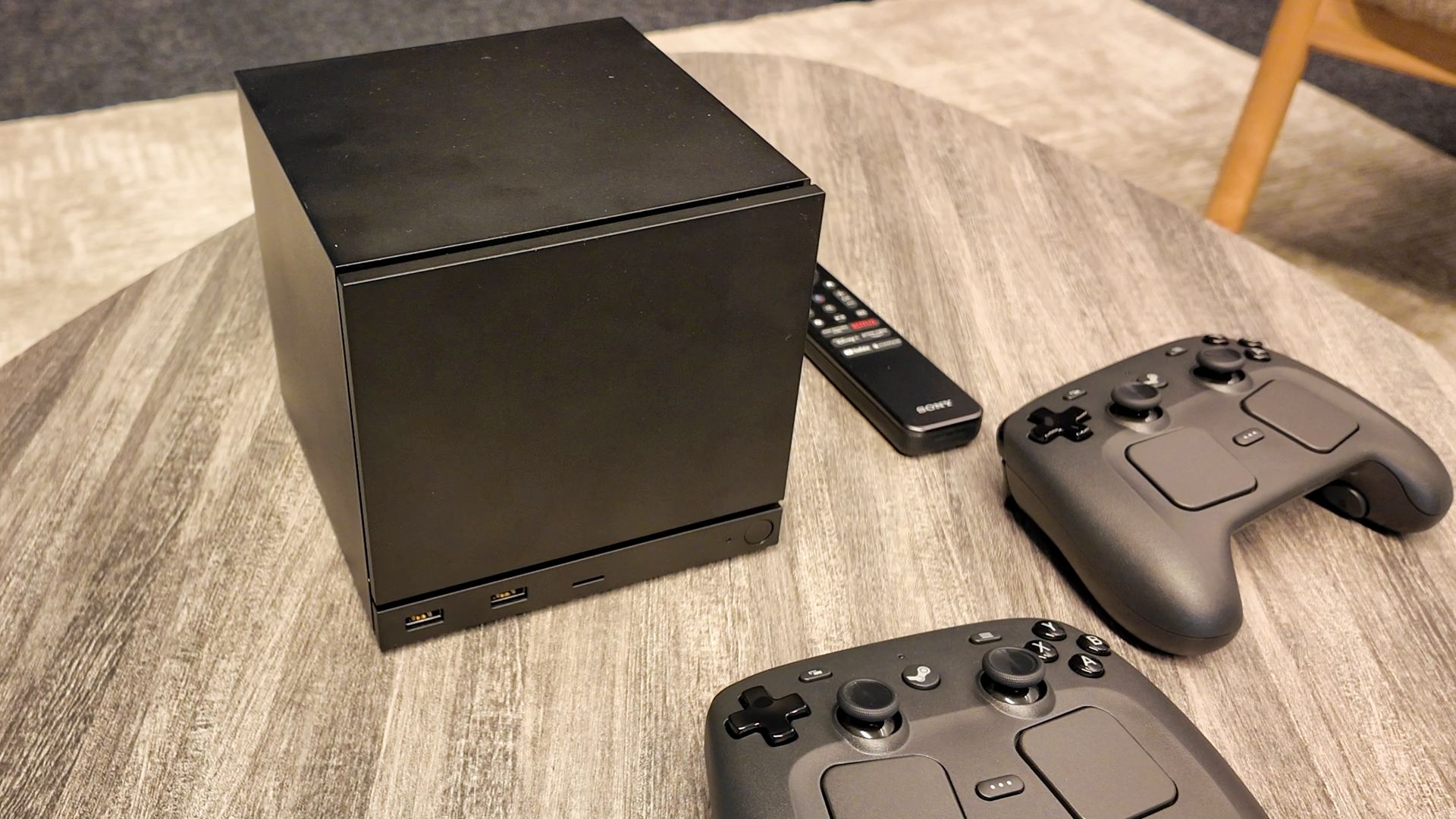
Beyond performance, Valve has confirmed two key flexibility features: both SSD and RAM will be user-upgradable, ensuring longevity as hardware evolves. The company also plans to open the platform to third-party customization, releasing faceplate CAD files and specifications in the coming months. This move invites manufacturers and enthusiasts to design their own front panels, potentially turning the Steam Machine into a modular, community-driven product.
Design freedom isn’t limited to aesthetics. Valve’s decision to allow third-party modifications could also extend to cooling solutions, storage expansions, or even internal component swaps—though official guidelines on compatibility will be critical to avoid compatibility issues.
Hardware Shortages Delay Pricing and Dates
The Steam Machine’s debut has faced repeated delays, primarily due to global memory and storage shortages. Valve had hoped to announce pricing and a release window earlier this year, but supply constraints have pushed back concrete details. Despite this, the first half of 2026 remains the target for both the Steam Machine and its companion Steam Frame—though exact timelines could shift if component availability improves.
For now, the focus is on performance benchmarks and modularity. Whether Valve can deliver on its 4K promise without sacrificing gameplay fluidity—or if consumers will accept the tradeoffs—remains to be seen. One thing is clear: the Steam Machine is being built with adaptability in mind, from hardware to design.