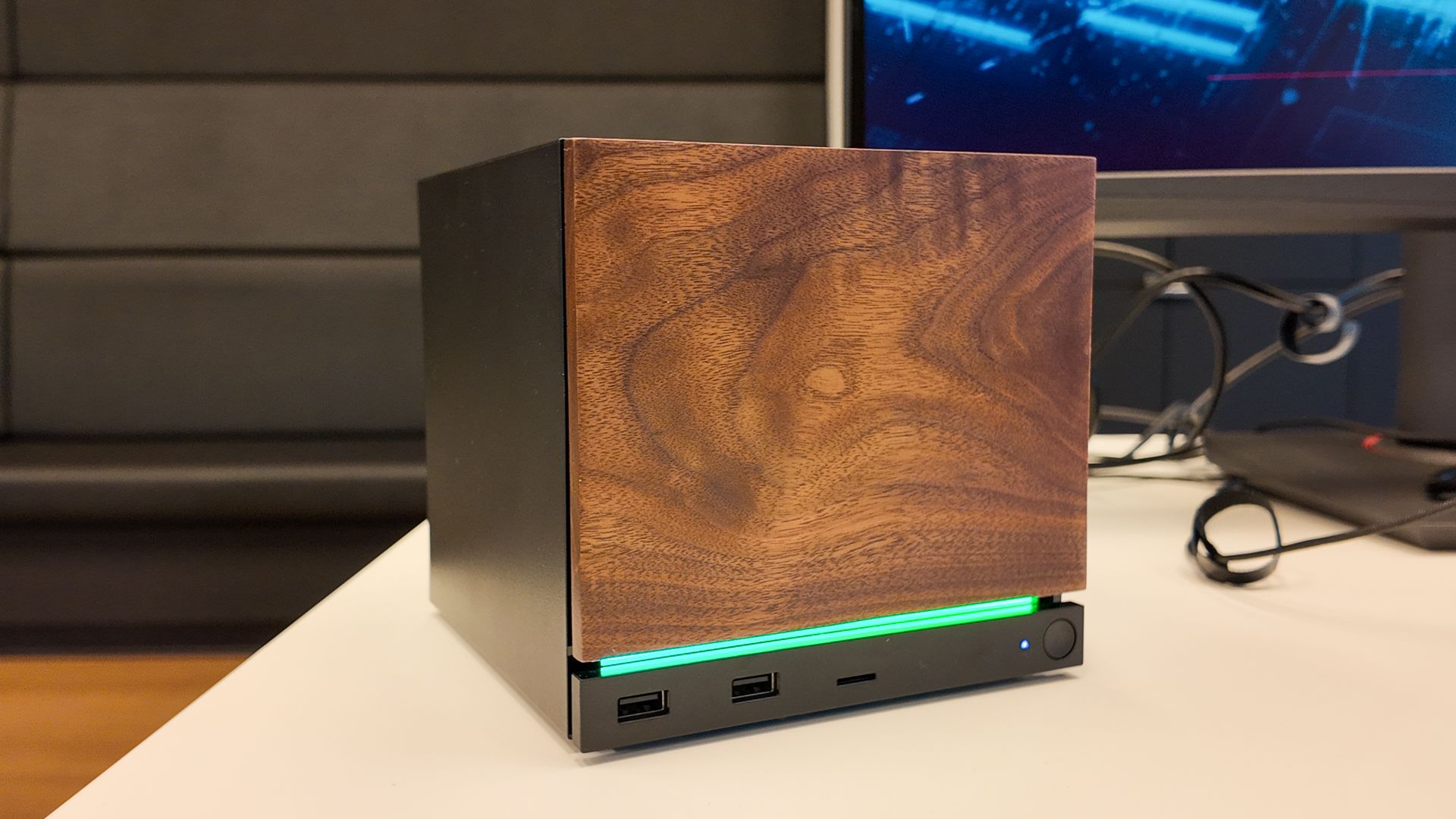
The Steam Machine was supposed to bring SteamOS into living rooms at a fraction of the cost of a traditional gaming PC. Now, Valve’s ambitious plan is caught in the crossfire of a memory market crisis, with DDR5 and storage prices soaring to unprecedented levels. What was once a $500–$600 dream may now require a four-figure investment—if it launches at all.
In a recent update, Valve admitted that the memory and storage shortages plaguing the industry have forced a reassessment of pricing and launch timelines. The company, which had hoped to announce concrete details by now, is instead navigating a landscape where a 16GB DDR5 SODIMM kit—once under $50—now commands nearly $200. Analysts report memory costs have surged over 90% in early 2026 alone, and the situation shows no signs of easing.
The Steam Machine relies on SODIMM RAM, typically found in laptops, where pricing has become even more volatile. While Valve may secure bulk discounts, the sheer scale of the shortage means even negotiated rates could push the final price well beyond initial expectations. A build with an RTX 5060-equivalent GPU and DDR5 now starts around $900, and that’s before accounting for the premium Valve might need to absorb to keep the device competitive.
Key Specs and the Cost Conundrum
Valve’s original vision for the Steam Machine centered on affordability, but the hardware landscape has shifted dramatically
- Memory: DDR5 SODIMM (likely 16GB, upgradeable)
- Storage: 512GB or 2TB SSD (prices for 2TB drives now exceed $200)
- GPU: Comparable to an RTX 5060 or RX 9060 XT (current mid-range options)
- Target Price (Original Guess): $500–$600
- Current Market Reality: $800–$1,000+ for equivalent builds
The 2TB model, in particular, may face an existential pricing challenge. With storage costs alone nearing $200, adding a premium for the GPU and RAM could easily push the total into four figures. Valve’s engineers have emphasized that the device should price like a PC, not a console—but in today’s market, even budget PCs with DDR5 are struggling to stay under $1,000.
Who Stands to Lose?
The Steam Machine’s primary appeal was its potential to democratize high-performance gaming without the complexity of a traditional PC. Yet, if the final price hovers near $1,000, it risks alienating its core audience. Consumers already spending upward of $900 for a prebuilt with similar specs may see little incentive to switch, especially if Valve doesn’t offer long-term software or hardware subsidies.
Unlike consoles, the Steam Machine isn’t locked into an ecosystem that guarantees recurring revenue. Users could install any OS, bypassing Steam entirely. Without a compelling value proposition—whether through price, exclusives, or hardware upgrades—demand may fizzle before launch.
A Glimmer of Hope?
Valve isn’t without options. The company could opt for a phased rollout, releasing a base model with minimal storage and RAM at a lower price point, then allowing upgrades later. Alternatively, it might delay launch until supply chains stabilize, though the first half of 2026 deadline remains firm. A limited regional launch—perhaps in the U.S. first—could also mitigate early shortages, though it would do little to quell resale speculation.
Yet even if Valve secures favorable contracts, the broader market dynamics work against it. Console manufacturers like Sony and Microsoft benefit from economies of scale and vertical integration, locking in hardware at predictable costs. Valve, while influential, lacks that leverage. The result? A product caught between the rock of soaring component costs and the hard place of an uncertain gaming PC market.
For now, the Steam Machine’s fate hangs in the balance. Whether it emerges as a groundbreaking living-room PC or a cautionary tale about supply chain volatility remains to be seen—but one thing is clear: the path to $500 just got a lot harder.