Hard disk drives have long been the forgotten stepchild of storage technology—slow, bulky, and outclassed by the blistering speeds of NAND flash. But Western Digital is betting that HDDs aren’t obsolete yet. The company has just unveiled two breakthrough technologies that could finally close the performance gap between traditional spinning rust and modern QLC SSDs—while also introducing a new class of drives designed specifically for AI data centers.
The stakes couldn’t be higher. As data volumes explode, particularly in AI training workloads, the need for high-capacity, cost-effective storage has never been more urgent. Western Digital’s latest advancements aren’t just incremental upgrades; they’re a fundamental rethinking of how HDDs read, write, and store data.
The first innovation, High Bandwidth Drive Technology, is already shipping to customers. It doesn’t just double I/O speeds—it lays the groundwork for an eightfold increase in the future. The trick? Simultaneous multi-head access across multiple tracks, a technique that eliminates the traditional bottleneck of single-head serial processing. Early adopters are already validating the tech, but the real magic happens when paired with Western Digital’s second breakthrough: Dual Pivot Technology.
Unlike older dual-actuator designs that sacrificed capacity for performance, Dual Pivot Technology adds a second, independent actuator without compromising platter space. The result? A 3.5-inch drive that can cram in more platters—think 100TB capacities—while delivering twice the performance of today’s HDDs. Combined, the two technologies could deliver four times the I/O bandwidth of conventional drives, all while matching the price-to-performance ratio of QLC SSDs. And unlike flash, HDDs retain data for decades without degradation.
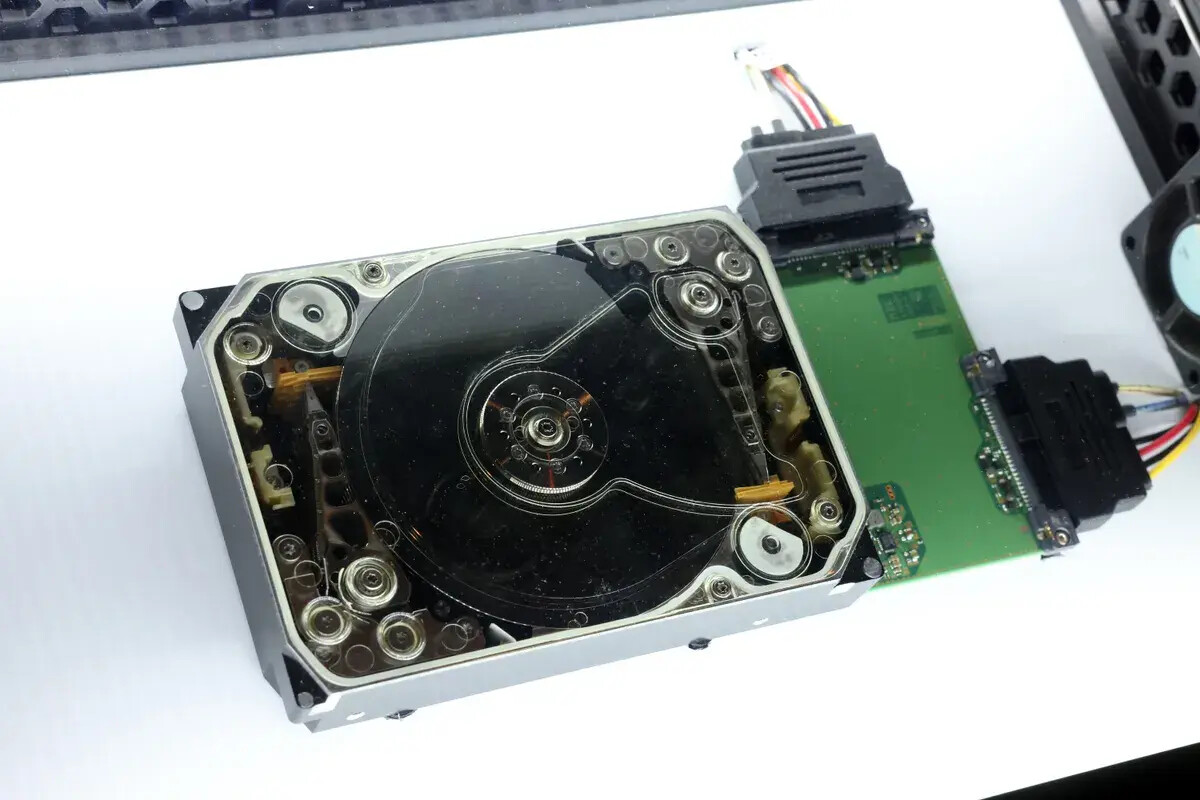
- High Bandwidth Drive Technology – Already in production; doubles I/O speeds, with a roadmap to 8x bandwidth.
- Dual Pivot Technology – Scheduled for 2028 (with early samples possible sooner); enables 100TB HDDs with SSD-like speeds.
- Power-Optimized HDDs – Targeting AI cold storage; 20% lower power, sub-second access, and capacities far exceeding tape.
- 2027 Qualification – Power-Optimized HDDs enter customer testing; Dual Pivot follows in 2028.
But Western Digital isn’t stopping at raw speed. The company is also developing Power-Optimized HDDs, a hybrid solution for AI data centers that need to balance capacity, cost, and access times. These drives trade some random I/O performance for longevity, operating at 20% lower power while delivering sub-second access—something traditional tape storage can’t match. For AI workloads where cold data must be retrieved in seconds rather than hours, this could be a game-changer.
The implications are massive. If Western Digital’s roadmap plays out, HDDs could reclaim their place as the go-to storage medium for bulk data—whether for archival, AI training, or even high-performance computing. With QLC SSDs facing endurance limits and escalating costs, the company’s bet on HDD innovation arrives at a pivotal moment. The question now isn’t whether HDDs can compete with flash, but whether they’ll redefine the storage landscape entirely.