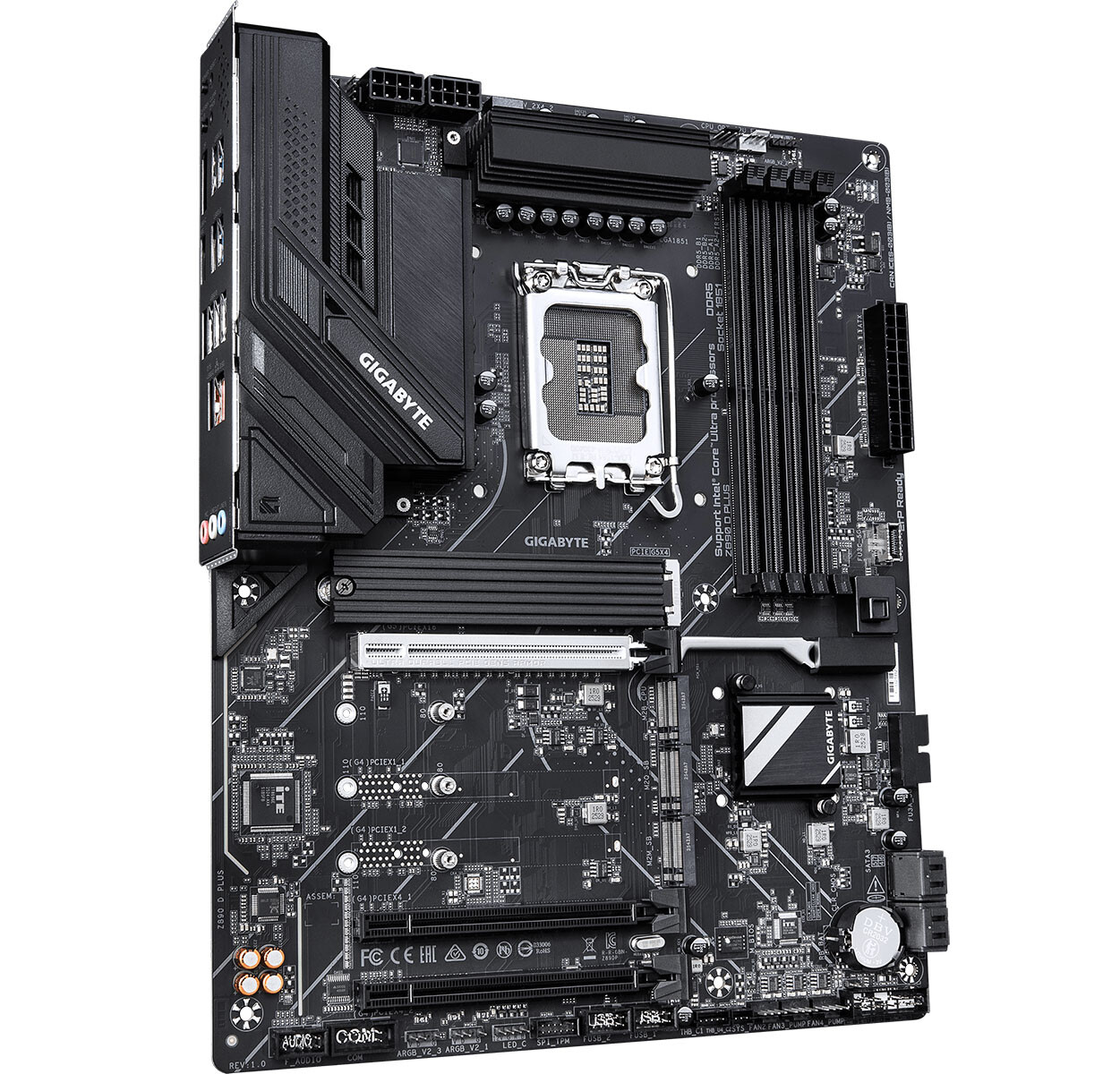
The GIGABYTE Z890 D Plus is not a motherboard for those chasing premium features. It skips USB4, Thunderbolt 4, and built-in Wi-Fi, yet still delivers the performance headroom of Intel’s latest Arrow Lake processors—making it an intriguing option for small businesses or home users who prioritize value over extras.
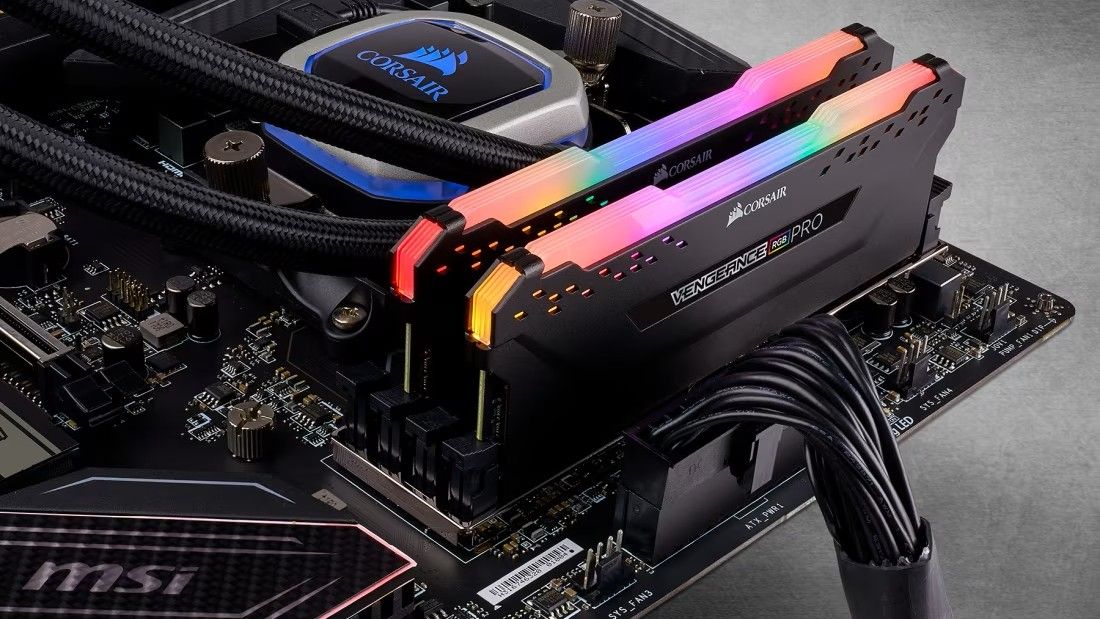
Unlike its more feature-packed siblings in GIGABYTE’s lineup, this board is built around a 12+1+2 phase VRM, designed to handle the power demands of Intel’s Core Ultra 250K Plus and 270K Plus chips without unnecessary frills. Its ATX form factor keeps it flexible for desktops, while its four DDR5 memory slots and single PCIe 5.0 x16 slot ensure compatibility with next-generation hardware.
Key specs
- Chipset: Intel Z890 (Arrow Lake support)
- Socket: LGA1851
- Memory: 4x DDR5 slots (DDR5/DDR4 compatible)
- Storage: 1x M.2 Gen 5 x4 slot with heatsink, 2x M.2 Gen 4 x4 slots, 4x SATA 6 Gbps
- Expansion: 1x PCIe 5.0 x16 (easy-eject), 2x PCIe 4.0 x16 (electrical)
- Ports: USB 3.2 Gen 2 Type-C (10 Gbps), DisplayPort, 2.5 GbE LAN
- Connectivity: No built-in Wi-Fi or Bluetooth
- Power: 12+1+2 phase VRM with 24-pin ATX + 2x 8-pin EPS
The omission of USB4 and Thunderbolt 4 ports is deliberate, targeting users who don’t need high-speed data transfer or display connectivity. Instead, it focuses on essentials: a single DisplayPort for output, a 10 Gbps Type-C port for peripherals, and a Realtek ALC887 audio solution that balances cost with decent performance.
Who it’s for—and who should look elsewhere
This board is not for content creators or professionals who rely on Thunderbolt 4 for external GPUs or high-speed storage. Its lack of Wi-Fi also means it won’t appeal to users who want seamless wireless connectivity without an adapter. However, for small businesses or home users building a workstation where speed isn’t the primary concern, the Z890 D Plus offers a way to leverage Intel’s latest chipset without paying for features they don’t need.
The trade-off is clear: you gain a more affordable entry point into the Z890 ecosystem while sacrificing flexibility. Whether that’s a win depends on how much you value simplicity over future-proofing.