The genius of BioShock Infinite*’s approach wasn’t just in the selection of songs—it was in how they were *used*. Take the moment when Booker DeWitt first hears *Everybody Wants to Rule the World echoing through Columbia’s streets. The track, originally recorded in 1985, isn’t just a background hum; it’s a sonic anomaly that lingers in the player’s mind. Why does this song exist in a world where the year is 1912? The game doesn’t explain immediately. Instead, it lets the question fester, turning an otherwise forgettable piece of licensed music into a critical piece of the puzzle.
This wasn’t just clever—it was a calculated risk. Licensing popular songs for a game is expensive, and most developers treat them as disposable atmosphere. But Infinite treated them as narrative tools. The Bee Sharps’ rendition of God Only Knows isn’t just a pretty performance; it’s a clue that something is wrong with Columbia’s timeline. The same goes for Tainted Love drifting through the air during a tense confrontation or Shiny Happy People playing as Booker navigates a fractured reality. Each song is a breadcrumb, a hint that the world isn’t as stable as it seems.
The payoff comes when players finally piece together the truth: Albert Fink, the game’s villain, has been using tears in reality to pull music—and entire moments—from the future. The anachronisms that once felt like stylistic choices suddenly make sense. But by then, the game has already done its work. Players have spent hours questioning what they’re hearing, their immersion deepened by the knowledge that nothing in Columbia is as it should be.
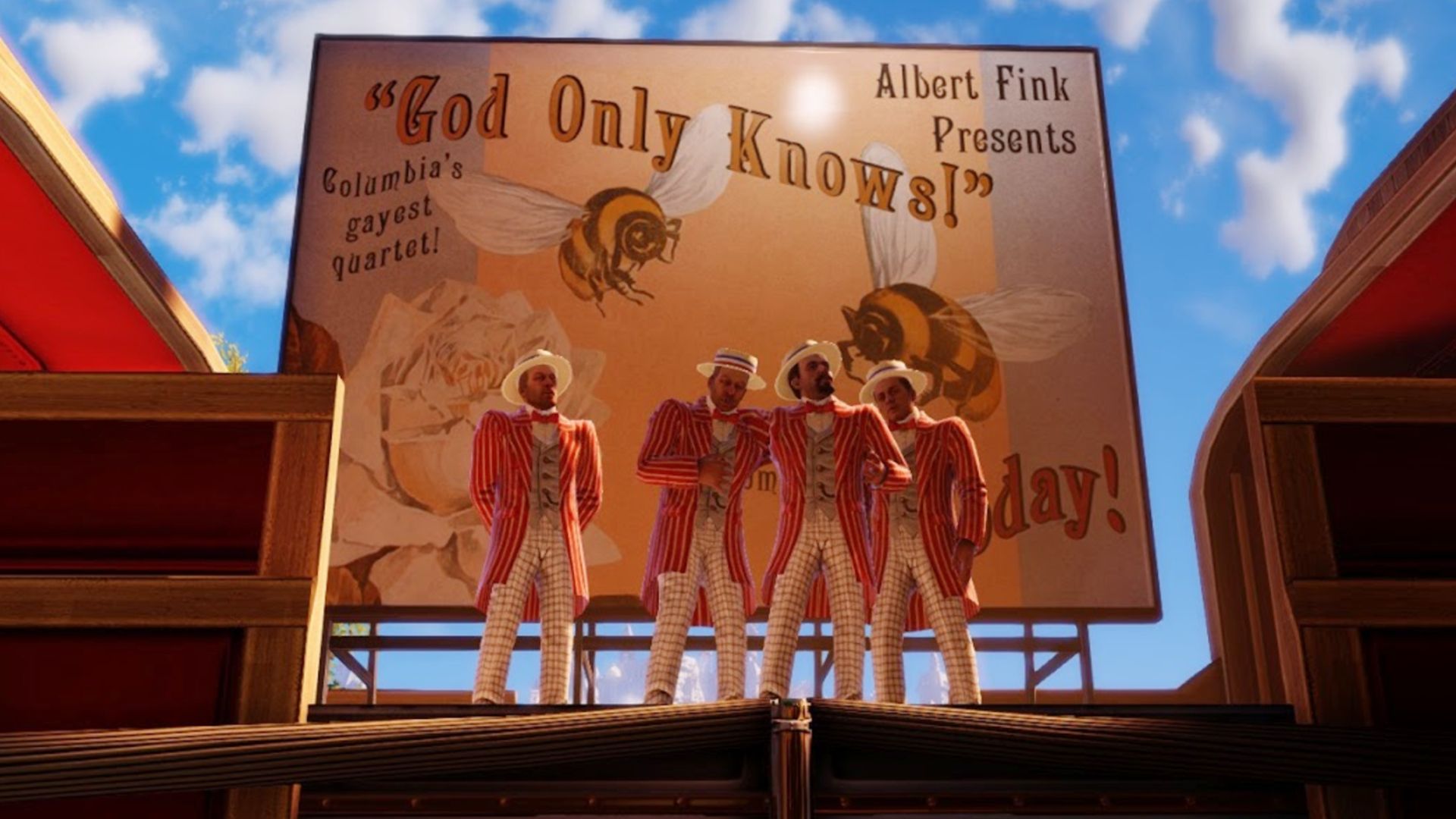
Even the original compositions in the game serve this purpose. The haunting choral pieces that play during the game’s darker moments aren’t just mood-setting—they contrast sharply with the licensed tracks, reinforcing the idea that Columbia is a place where time itself is broken. And then there are the quieter moments, like Elizabeth’s acoustic guitar performance of Will the Circle Be Unbroken*, a fleeting burst of warmth in an otherwise fractured world. These aren’t just musical interludes; they’re emotional anchors, reminding players that even in a universe where reality is malleable, there are still threads of humanity to hold onto.
Thirteen years after its release, *BioShock Infinite*’s soundtrack remains unmatched in how it blends licensed music with original composition to create a world that feels both immersive and intentionally flawed. It’s a masterclass in how sound can do more than set a mood—it can shape perception, reward curiosity, and make players question everything they think they know. In an era where games often treat music as an afterthought, *Infinite proved it could be the foundation of a story.
Most importantly, it showed that anachronisms aren’t mistakes—they’re opportunities. A Bee Gees song in 1912 isn’t just a plot device; it’s a challenge to the player’s sense of reality. And in a game where the line between illusion and truth is constantly shifting, that’s exactly what makes it work.