Skyrim’s NPCs have always been a study in functional design over realism—clunky animations, repetitive dialogue, and a general lack of personality that players have learned to ignore over time. But one particular glitch, buried in the game’s loading mechanics, has finally been exposed as the visual eyesore it truly is. When NPCs open doors during load screens, they don’t fully render the other side, leaving only a sliver of darkness visible before fading away. The result? A split-second moment where characters appear to vanish mid-transformation, their hair and shadows distorting in a way that feels less like a game and more like a corrupted file.
For years, players assumed this was an unavoidable limitation of the game’s engine. Modders like wSkeever had even attempted to remove the animation entirely with workarounds like the Get On With It mod. But the real issue wasn’t the animation itself—it was the grotesque visual artifact that occurred in the milliseconds before the fade. NPCs would briefly glow unnaturally, their hair and eyebrows disappearing as transparency effects failed, leaving them looking like flickering ghosts. A recent video by wSkeever brought this flaw into sharp focus, and the reaction was immediate: players who had never noticed it before now found themselves unable to unsee it.
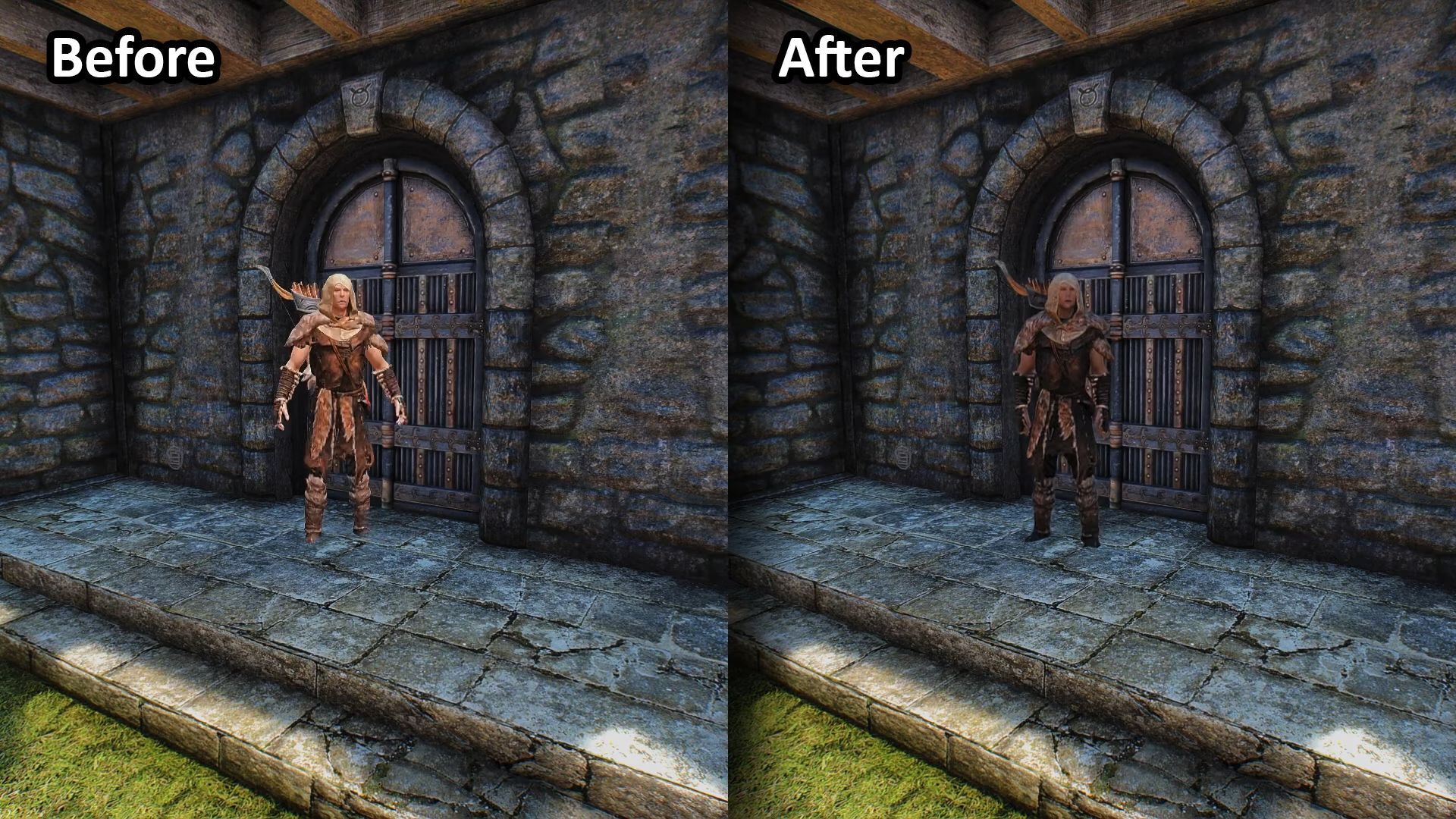
The fix is staggeringly simple: a one-kilobyte mod called No Load Door NPC Fade replaces the broken transition with a seamless door-opening animation. No more glitches, no more flickering, and no more NPCs that look like they’ve been hit by a power surge. It’s the kind of tweak that makes you question why Bethesda never addressed it in the first place.
What makes this mod particularly notable isn’t just its effectiveness, but how it fits into a broader pattern of wSkeever’s work. Their portfolio includes utility mods like Lock Add-Ons and Dynamic Things Alternative, as well as more whimsical additions like quest mods that repurpose existing NPCs and even a mod that introduces Doctor Who’s Weeping Angels into Skyrim. The consistency of their contributions suggests a modder who understands the game’s mechanics inside and out—and a community that eagerly adopts their fixes.
For players who’ve spent hundreds of hours in Skyrim, the mod serves as a reminder of how small details can shape immersion. A glitch that was once ignored now feels like a necessary upgrade, proving that even in a game as polished as Skyrim, there’s always room for improvement.