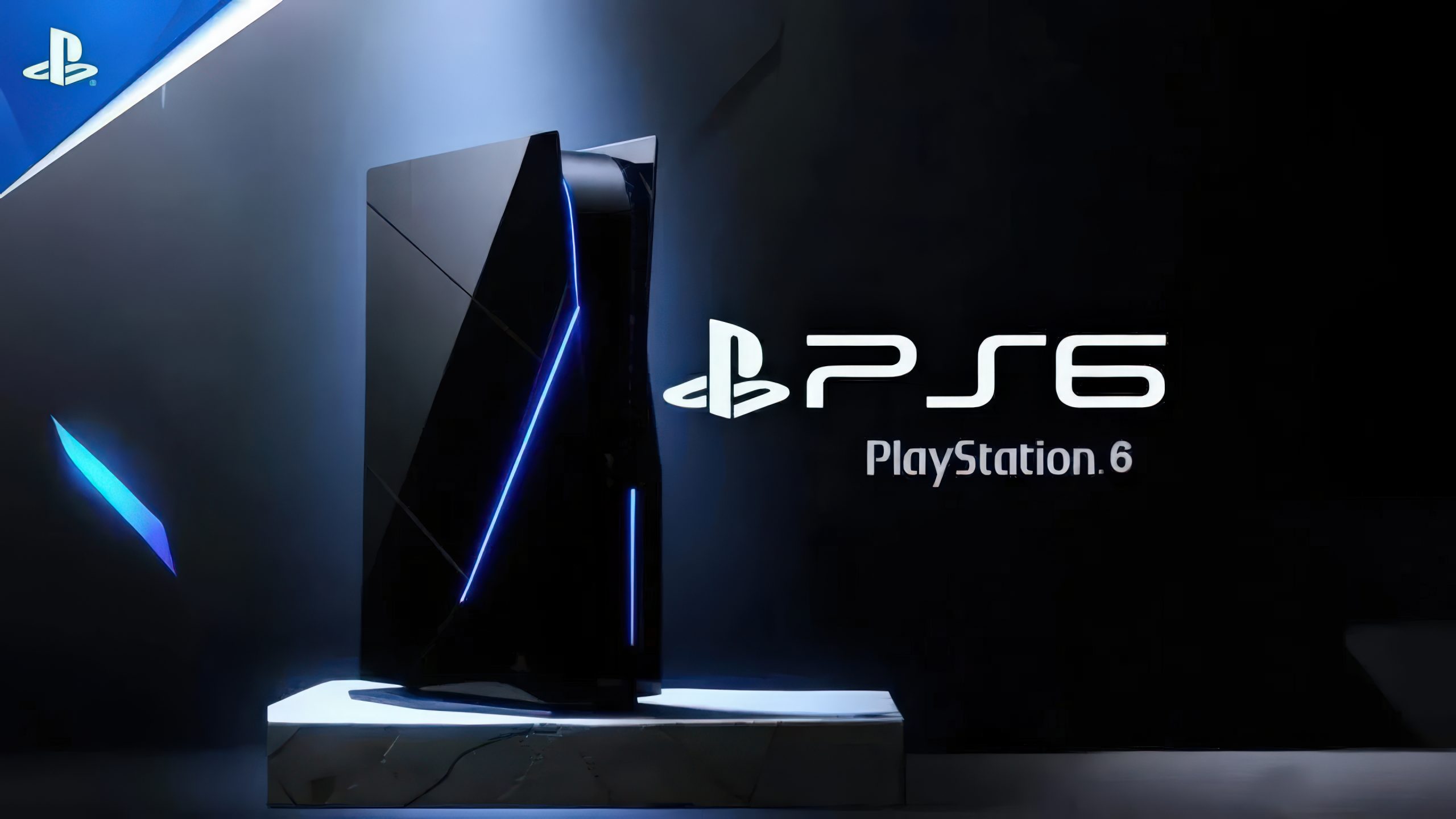
PlayStation 6 Everything We Know About Sony’s Next-Gen Console So Far Alessio Palumbo on Feb 21, 2026 at 03:06pm EST Key Features Sony hasn't officially announced the PlayStation 6 yet, but that hasn't stopped the rumor mill from churning out an increasingly steady stream of leaks, insider reports, and solid hints from the company itself. With the PlayStation 5 well into the latter half of its lifecycle and the PS5 Pro already on shelves, the attention of hardcore gamers is increasingly turning toward whatever comes next. Here is everything we know so far about the PlayStation 6, from its release window and hardware to pricing, design, and the possibility of an entirely new PlayStation handheld launching alongside it. Read this article with the significant caveat that most of this info is likely still in flux and may not even have been finalized by Sony itself yet. We'll continue updating this article up to the console's release whenever significant new information becomes available. Release Date and Pricing Sony has maintained a remarkably consistent console release cadence: the PS3 launched in 2006, the PS4 in 2013, and the PS5 in November 2020, a seemingly near-perfect seven-year gap each time. Applying that pattern to the PS5 points to a 2027 release window for the PS6, and that was the most widely cited target among leakers, chiefly YouTuber Moore's Law Is Dead (MLID) and renowned AMD insider KeplerL2. However, in January 2026, MST International senior analyst David Gibson warned that while Sony's existing memory inventory would shield it from the short-term impact of rising RAM prices, increased costs could become a serious issue in the fiscal year ending March 2027, and noted that the PS6's release is therefore "likely to be delayed longer than many expected." Then, on February 15, 2026, Bloomberg published an even more alarming report citing anonymous sources familiar with Sony's PlayStation 6 plans. The report stated that Sony is now "considering pushing back the debut of its next PlayStation console to 2028 or even 2029", still largely due to the ongoing memory shortage that has no end in sight. If true, this could mark the longest gap between PlayStation consoles to date, while also giving Microsoft a chance to capitalize on with its next Xbox console, which is still reportedly targeting a late 2027 release window. Pricing is one of the most uncertain aspects of the already still nebulous PS6 picture, and the RAM shortage has complicated things further. The PS5 launched at $499 for the standard edition, but with rising production costs, the PS6 is highly unlikely to match that price point. Most estimates from credible sources currently place the PS6 between $500 and $600, though some industry observers have pushed that estimate as high as $700–$900 depending on the memory situation and model configuration. The PS5 Pro's $699 launch price in 2024 may have been responsible for setting a new psychological ceiling for PlayStation hardware. Hardware Specifications Sony's continued partnership with AMD since the days of the PS4 is one of the few hardware details confirmed with high confidence. Reuters reported in September 2024 that Intel had lost out on a bid to design the PS6 chipset back in 2022, with AMD winning the contract. This makes sense from a backward-compatibility standpoint, since the PS5 and PS5 Pro are both built on custom AMD silicon. Leaked specifications, primarily from the aforementioned leaks shared by MLID and Kepler_L2, point to a custom APU featuring: Manufacturing node: TSMC N2 (2nm), delivering substantial efficiency gains over the PS5's 7nm process. CPU: AMD Zen 6 architecture, offering a substantial leap from the Zen 2 found in both the PS5 and PS5 Pro, which should dramatically reduce the CPU bottleneck issues seen in demanding titles. Memory: It is expected that the PS6 will feature GDDR7 RAM offering approximately 640 GB/s bandwidth, which would be a 43% increase over the PS5's 448 GB/s, though using a narrower 160-bit memory bus rather than the PS5's 256-bit bus, with the speed difference compensating for the reduced bus width. Total RAM capacity has not been reliably leaked yet. GPU: AMD's next-generation RDNA 5 GPU architecture, which will be used by both PS6 and the next Xbox. Though, according to KeplerL2, the new PlayStation console won't feature the full RDNA 5 feature set that will be available on desktop graphics cards. Rasterization Performance: Multiple leaks from MLID and KeplerL2 indicate roughly three times the rasterization performance of the base PS5, with the teraflop count rising from 10.28 TFlops for the PS5 (and 18.05 TFlops for the PS5 Pro) to 34-40 TFlops for the PS6. Ray Tracing Performance: This is supposedly the big focus of the PlayStation 6 console. Thanks to the advancements planned for RDNA 5, ray tracing performance could increase by a massive 6-12x compared to the PlayStation 5. Some of those advancements were actually co-developed by AMD and Sony through the so-called Project Amethyst, a machine learning-focused initiative. Originally announced in late 2024, Project Amethyst received a major update in October 2025, when AMD unveiled three key technologies that PlayStation 6 System Architect Mark Cerny practically confirmed will be in the new console: Neural Arrays: A new approach to grouping GPU compute units so they can work together as a single AI engine, enabling better upscaling and denoising at lower cost to GPU performance. This was described as a fundamental improvement to technologies like Sony's PSSR. Radiance Cores: A new dedicated hardware block designed for ray and path tracing, taking full control of ray traversal (one of the most compute-heavy tasks currently handled inefficiently across shared resources) and freeing the GPU's shader cores for their primary functions. Cerny noted: "There's a significant speed boost that comes from putting the traversal logic in hardware, and a further boost that comes from that hardware operating independently from the shader cores." Universal Compression: A software layer that compresses data of all types (not just specific file formats, as in current solutions) as it flows through the graphics pipeline, effectively boosting available memory bandwidth. AMD's Jack Huynh, SVP and GM of Computing and Graphics Group, described memory bandwidth limitations as a key barrier to next-gen rendering techniques, and Universal Compression is intended to address that without requiring an expensive hardware memory upgrade. There's no info yet on the storage. On the connectivity side, support for the new HDMI 2.2 specification (which allows resolutions up to 10K at 120Hz, 4K at up to 480Hz, and 8K at up to 240Hz) and USB4 Version 2.0 seem like a given, especially if the delay rumors turn out to be correct. PlayStation 6 Handheld: Project "Canis" One of the most unexpected elements of the PlayStation 6 conversation is the strong rumor that Sony is planning to launch a dedicated gaming handheld alongside, or shortly after, the PS6 home console. This would be quite the surprise for PlayStation handheld fans, who had almost given up on the idea of a new handheld console after the resounding failure of the PS Vita. Bloomberg first reported in 2024 that Sony was exploring a gaming handheld, internally dubbed "Project Canis." Since then, leaked AMD documentation uncovered by MLID has added substantial hardware detail, and multiple leakers have corroborated the device's existence. Sony has also updated its PS5 developer kits to prioritize "Low Power Mode" support, with documentation suggesting developers ensure their games can run on just eight CPU threads. Multiple sources have since interpreted this as Sony quietly preparing the software ecosystem for handheld hardware. Project Canis Tentative Specs Chip: Monolithic APU built on TSMC 3nm of approximately 135mm². CPU: 4x Zen 6c cores for games + 2x low-power Zen 6 cores dedicated to the OS. The OS offload reportedly frees roughly 20% additional CPU headroom for games. GPU: 16 RDNA 5 compute units, clocking around 1.20 GHz in handheld mode and 1.65 GHz when docked. Memory: LPDDR5X on a 192-bit controller, with theoretical support for up to 48GB; no solid figure has been confirmed, though developers consulted on the matter suggested anything between 24 –36GB would be necessary to run next-gen games with features such as UE5's Nanite. Performance: Roughly half the raw rasterization power of the base PS5, but with notably stronger ray tracing performance due to the RDNA 5 architectural improvements. Docked rasterization performance could be around 0.55 – 0.75× PS5, while ray tracing could land at 1.3 – 2.6× PS5 thanks to RDNA 5's efficiency gains. Some PlayStation gamers have worried that the handheld could "hold back" new PlayStation 6 games, but according to Massive Damage's Art Director Bryan Heemskerk, PS6 games are more likely to be held back by PC ports. PlayStation 6 Games This is by far the most speculative paragraph of the whole article, at least at the time of the original publication, for a very simple reason: it's way too early, and no PS6 games have been formally announced yet. That said, we can make a few educated guesses based on the known development timelines. First in line would obviously be Intergalactic: the Heretic Prophet, Naughty Dog's new sci-fi IP. It's been a long time since we got a new game from the studio (The Last of Us Part II launched in June 2020), and that's largely because Naughty Dog famously canceled The Last of Us Online in December 2023 because it didn't want to become bound to the live service development cycle. Intergalactic: the Heretic Prophet won't launch before 2027, according to Bloomberg's Jason Schreier. It will definitely launch on PlayStation 5, but it could be a prime candidate for a PS6 version when the PlayStation 6 eventually hits the market. The same goes for most of the big games that are tentatively scheduled for 2027-2028: Creative Assembly's Alien Isolation sequel Ubisoft's Assassin's Creed Hexe Cloud Chamber's BioShock 4 Larian's Divinity Bethesda's The Elder Scrolls VI Square Enix's Final Fantasy VII Remake Part 3 Avalanche Software's Hogwarts Legacy 2 4A Games' Metro Exodus sequel Respawn's Star Wars Jedi Part 3 Ubisoft's Tom Clancy's Splinter Cell Remake Ubisoft's Tom Clancy's The Division 3 Saber's Warhammer 40,000: Space Marine 3 CD Projekt RED's The Witcher IV CD Projekt RED's + Fool Theory's The Witcher Remake All these games will likely be cross-generation, offering a PlayStation 6 version with additional bells and whistles at some point. The cross-gen phenomenon was already huge between PlayStation 4 and PlayStation 5, and given current industry trends, it's only going to get larger. As for true PS6-only titles, it will take a very long time for those. Maybe the next Mass Effect, the freshly announced Star Wars: Fate of the Old Republic, and the God of War remake trilogy will qualify. Needless to say, we'll slowly update this section (as with the others) once more concrete details become available. Stay tuned. Read all comments on PlayStation 6 – Everything We Know About Sony’s Next-Gen Console So Far